



 +94 (0) 31 228 1114
  info@cocopeatcoirmulch.com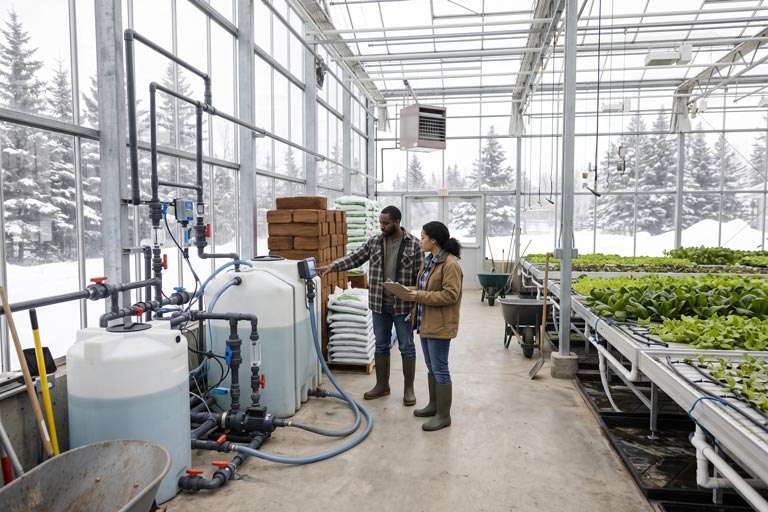

Drain Water Recirculation in Coco Coir: 6 Rules
Drain Water Recirculation in Coco Coir: 6 Rules for Cleaner, Cheaper Fertigation
Drain water recirculation in coco coir used to be a nice extra for the keen grower. Now it’s becoming the price of staying in business in a lot of places. Water costs more, fertiliser costs more, and regulators are watching what leaves your greenhouse gutter. So what happens to all that drain you’ve been sending to the ditch? Done well, it goes back to the crop. Done badly, it carries disease from one row to the next. This guide shows how tomato, pepper, cucumber and berry growers keep it on the good side of that line.
Fair warning: there’s a little chemistry ahead. I’ll keep it friendly.
Why is everyone suddenly talking about zero discharge?
Look at the Netherlands first. Dutch growers have been working toward a 2027 goal of almost no nutrient discharge from soilless greenhouses, and most of the big farms already recycle their drain. In Ontario, greenhouses around Leamington and Kingsville sit close to Lake Erie, where algae blooms put a bright spotlight on farm runoff. The province brought in greenhouse nutrient feedwater rules around 2015, and similar nutrient runoff rules are spreading across other regions.
Then there’s the other side of the world. Growers in Dubai and parts of Mexico don’t need a regulator to tell them water is precious; the bill tells them. In South Korea and Japan, land is small and every litre of fertiliser solution has to earn its place. Different reasons, same direction.
The good news is that coir suits this job. It drains freely, it holds air even when it’s wet, and it gives steady, repeatable numbers when the medium is clean to start with. That’s exactly what a closed system wants.
How closed-loop fertigation works with coir
Picture a circle. Fresh feed goes out through the drippers into the bag. The plants take what they need, and a fraction of the solution drains out of the bottom into the gutter. From there it runs to a drain tank, passes through a filter, gets disinfected, is tested, topped up with fresh water and fertiliser, and heads back out to the crop. That’s closed-loop fertigation in one breath.
Where does coir fit? The International Coconut Community (ICC) places coir pith and fibre in its husk-based product group, and that tells you something: a farm by-product has grown into a serious horticultural input. In a recirculating system, the medium has to behave the same way bag after bag. Washed, low-EC coir with an even particle mix does that. A random mix with salty batches does not.
Drain water recirculation in coco coir: what the numbers look like
Let’s do a quick sum. Say a block uses 10,000 litres of feed in a day with a drain percentage of 25. Run to waste, that’s 2,500 litres of water and fertiliser that you paid for and then threw away. Recirculated, most of it comes back into the tank. Over a long season, that adds up to a lot of water and a lot of cash.
Growers commonly report savings of 20 to 40 percent in water and similar savings in fertiliser compared with run-to-waste systems. Your own number will depend on climate, crop and how tight the system is. Hot, bright weather makes plants drink more, so the drain shrinks; dull winter days push it up.
There’s a catch, of course. Savings only count if the crop performs. A system that saves 30 percent of the water and loses 5 percent of the yield isn’t a win. That’s why the six rules below matter.
The six rules, in plain words
None of these rules is complicated. Together, though, they’re the difference between a loop that runs quietly for years and one that causes a headache in week ten.
Rule 1: Start with clean, low-EC media
If the bag arrives salty, your drain arrives salty, and your recirculating tank turns into a salt bank on day one. Choose washed coir with a low starting EC and a steady particle mix. For a tomato house, grow bags for tomato that are consistent from the first bag to the last make the tank much easier to manage, because you’re not chasing surprises every few days.
Coco coir fertigation has one quirk worth knowing. Coir holds calcium and magnesium and gives up potassium, so early drains are often high in potassium and low in calcium. Expect that, and don’t panic.
Rule 2: Measure your drain percentage every day
Drain percentage is simply the share of irrigation water that comes out of the bottom of the bag. Most growers aim for roughly 20 to 30 percent in strong light and a bit less in dull weather. Catch it in a few tray bins at representative spots, and measure the volume and EC each day.
Compare drain EC with feed EC. If drain EC climbs well above feed EC, the root zone is soaking up salts and you should lift the drain a little. If it falls far below, the plants are hungry or the water is passing through too fast. Either way, the numbers talk to you if you let them.
Rule 3: Disinfect every litre of drain
This is the rule you can’t skip. Drain water collects spores, bacteria and sometimes viruses from every plant it touches, and your pump will happily deliver them to every other plant. Drain water disinfection usually starts with a filter, such as a screen or slow sand filter, followed by UV, heat or ozone.
UV is common and tidy, but the dose needs to be high enough for the pathogens you worry about, and the water needs to be clear for the light to work. Heat treatment, at around 95 degrees Celsius for 30 seconds, is the most proven method, though it uses a lot of energy. Whatever you choose, test the treated water now and then, and clean the lamps or exchangers on schedule.
Rule 4: Keep an eye on sodium and chloride
Plants take up water far faster than they take up sodium and chloride. In a loop, those two keep circulating and keep creeping up. This sodium build-up in coir is the classic reason a recirculating system gets into trouble in the second half of the season.
Your water source decides how bad it gets. Rainwater and reverse osmosis water start close to zero. Hard well water might start high. A common rule of thumb for tomato is to start flushing or dumping part of the tank when sodium in the drain climbs past about 6 to 8 mmol/L, and sooner for salt-shy crops like strawberry and pepper. Ask your lab to confirm limits for your crop and your region.
Rule 5: Mix with care, don’t just top up
Drain isn’t the same as fresh feed. It’s missing some nutrients and carrying extra of others. So send a drain sample to the lab every week or two and check nitrogen, potassium, calcium, magnesium, sulphate and sodium. Then adjust your recipe so the mixed feed lands on your target.
Think of it like seasoning soup that’s already been simmering. You don’t pour the whole salt shaker in and hope. You taste, you adjust, and you taste again.
Rule 6: Plan the flush and keep records
Every loop needs an exit plan. Decide in advance when you’ll dump part of the tank, where the dumped water will go, and who signs off. Some farms send it to outdoor crops or a treatment pond; others follow strict local rules. Know yours before the day you need to act.
Keep a simple log of tank EC, pH, sodium, drain percentage and each flush. A year later, you’ll be grateful. When a problem pops up, you can look back and see exactly when the trend started.
What equipment do you actually need?
Less than the sales brochures suggest, at least to start. You need a way to collect drain, a covered, dark tank (light feeds algae), a filter, a disinfection unit, and sensors for EC and pH. You need a sampling point you can reach easily, and a lab you trust. That’s the core of it.
Start with one block as a pilot rather than the whole farm. It keeps risk small and lets your crew learn the routine. And keep your media consistent while you learn; a steady supply from one of the Coir-based Product Exporters in Sri Lanka that washes and grades its coir carefully is a quiet advantage, since one variable you don’t have to chase is one less thing to go wrong.
Common slip-ups, and how to dodge them
A few mistakes show up again and again. Growers leave the drain tank uncovered, and algae moves in. They skip the lab test for a month, and sodium sneaks up. They dose fresh feed by habit instead of by the numbers. Or they treat the water but never check the lamp.
Each one is easy to fix. Cover the tank. Book the lab on a fixed day. Let the recipe follow the drain results. Put a lamp check on the weekly job list. Small habits, big payoff.
What growers tell us about running a loop
I used this six-rule list as a starter checklist for a client’s tomato block, and it stopped the crew from skipping the weekly sodium check. A short list on the wall does more than a thick manual in a drawer.
Our customers are really happy with the consistency of our coir, and a pepper grower in Mexico said it like this: “Drain EC stayed steady from week to week, so recycling the water didn’t turn into a guessing game.” That’s what you want. A boring loop. Boring means predictable, and predictable means yield.
Where do you start on Monday morning?
Pick one block. Measure its drain percentage for a week. Send a drain sample to the lab. Ask your supplier for the EC and washing details of the coir you’re using. Then sketch your loop on paper, tank by tank, before you buy anything.
It won’t feel exciting. But a clean, steady loop saves water, saves fertiliser and keeps you on the right side of the rules. And honestly, that’s a nice place to be.
Frequently Asked Questions
What does recirculating drain water mean in a coco coir greenhouse?
It means collecting the solution that runs out of the bottom of the bags, cleaning and testing it, adjusting the nutrients, and sending it back to the crop. The aim is to cut water use and fertiliser loss.
How much water and fertiliser can a closed system save?
Growers commonly report 20 to 40 percent less water and similar fertiliser savings compared with run-to-waste. Your result depends on climate, crop, water quality and how tightly the system is managed.
Do I have to disinfect recycled drain water?
Yes. Drain can carry spores, bacteria and viruses from plant to plant. Filtering followed by UV, heat or ozone is the usual approach, and treated water should be tested now and then.
How often should I flush or dump the recirculating tank?
It depends on sodium, chloride and EC levels, not the calendar. Many tomato growers start dumping part of the tank when sodium climbs past about 6 to 8 mmol/L, and sooner for salt-shy crops. Confirm limits with your lab.
Does a closed loop lower yield or raise disease risk?
Not when it’s managed well. Disinfection, regular lab tests and a clear flush plan keep the crop healthy. Problems usually come from skipped checks, salty media or poor water quality, not from the idea itself.
