



 +94 (0) 31 228 1114
  info@cocopeatcoirmulch.com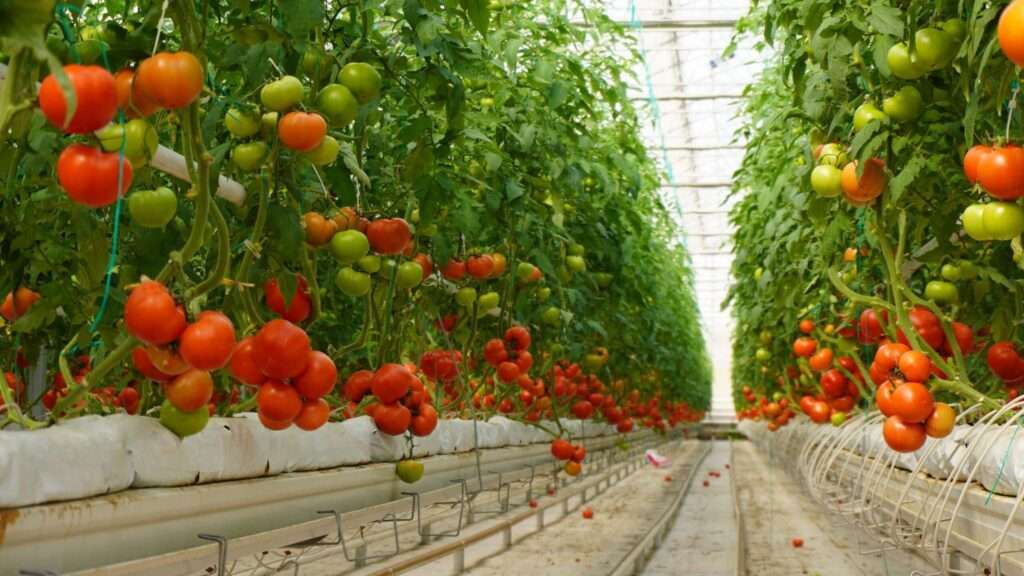

Cocopeat Planter Bags: 7 Ways They’re Changing Commercial Greenhouse Production
7 Ways Cocopeat Planter Bags Are Changing Commercial Greenhouse Production
There’s a moment in every commercial greenhouse operation’s history where the substrate question comes back around. What are we growing in, is it still the right choice, and is there something that would actually perform better at the scale we’re running? For a growing number of tomato, cucumber, and berry operations across South Korea, Japan, the Netherlands, and Canada, that question is leading to the same answer: cocopeat planter bags.
Not because they’re new. They’ve been around for years. But the combination of rising rock wool costs, tightening regulations on mineral substrate disposal in Europe, and steadily improving coir product quality has pushed more commercial operations to make the switch. And the ones who’ve been running cocopeat planter bags for multiple cycles are now reporting results that are hard to argue with.
Here’s what the data and the grower experience actually shows.
What Are Cocopeat Planter Bags?
Cocopeat planter bags are substrate containers pre-filled with coconut coir pith (coco peat) growing media. They come in standardized dimensions for common commercial crops, with pre-cut or slitted planting holes and drainage slits already positioned. The grower receives a bag that’s ready to hydrate and plant into, without the need to source substrate and fill containers separately.
The coco peat inside is typically buffered, pH-adjusted to between 5.5 and 6.5, and pre-washed to remove excess potassium and sodium that’s naturally present in raw coir. Starting EC is kept low enough that growers can begin their own feeding programs immediately after hydration without fighting against high background salt levels.
Cocopeat planter bags come in a range of configurations. Open-top designs for high-density leafy green and herb production. Closed-top with pre-punched holes for tomato and capsicum. Angled drainage slits for operations running recirculating nutrient systems. The variety of formats available now means the bags can be specified to match the crop system rather than the other way around.
-
Substrate Consistency Across Large Production Areas
One of the persistent challenges in large-scale commercial growing is maintaining consistency across hundreds or thousands of planting positions. When substrate is sourced in bulk and filled into containers manually, variation in fill density, moisture level, and particle size distribution is almost inevitable. That variation shows up in crop performance as uneven growth, inconsistent yield per plant, and higher management overhead as the team tries to equalize plants that are starting from different points.
Pre-filled cocopeat planter bags remove that variable. Each bag is filled to specification under controlled conditions. Fill density, moisture content, and starting EC are consistent from bag to bag and batch to batch. For operations in South Korea and Japan where crop uniformity is a commercial requirement for retail and export contracts, this consistency is not a luxury. It’s a baseline expectation.
Our customers in the Netherlands managing large-scale tomato blocks have said that switching to pre-filled bags reduced their early-season management workload significantly, because the plants were establishing from a consistent starting point rather than compensating for substrate variation.
-
Simplified Setup and Faster Planting
Manual substrate filling is time-consuming, physically demanding, and difficult to do accurately at high speed. In operations with tight seasonal windows, transplanting time is a genuine operational bottleneck.
Pre-filled cocopeat planter bags are laid, hydrated, and ready for transplanting within hours of delivery. There’s no mixing, no filling, no density checking. The setup labor per planting position drops substantially, which translates directly into either lower seasonal labor costs or faster planting cycles that allow the operation to hit its production window more precisely.
For greenhouse operations in Canada and Russia with short optimal planting windows, where getting transplants in the ground within a specific week can make a meaningful difference to end-of-season yield, this time advantage is particularly valuable.
-
Drainage and Aeration Engineered for the Crop
Generic plastic pots and manually-filled container systems give the grower limited control over drainage behavior without modifying the container itself. Pre-designed cocopeat planter bags are engineered with drainage slit positions and sizes matched to typical crop irrigation volumes and frequencies.
For high-frequency drip irrigation systems running tomatoes or cucumbers in South Korea and the Netherlands, the drainage design of the bag matters as much as the substrate itself. A bag that drains too slowly creates waterlogging during peak irrigation periods. One that drains too freely wastes nutrient solution and dries out the root zone between events.
Open top planter bags specifically designed for high-density production systems allow even greater flexibility, letting growers manage surface irrigation and drainage independently across the bag profile.
-
Compatibility with Recirculating Nutrient Systems
Regulatory pressure on nutrient discharge to waterways is increasing across the Netherlands, Germany, and increasingly in other European markets. Growers running open drainage systems who want to transition to recirculating (closed-loop) nutrient systems face a substrate change decision as part of that transition, because not all substrate containers are compatible with the precise drainage management that recirculating systems require.
Cocopeat planter bags designed for recirculating systems have controlled drainage outlets that allow nutrient solution return to be captured cleanly. The coco peat substrate itself supports recirculating system management well because its cation exchange capacity buffers nutrient fluctuations between fertigation events.
According to Sri Lanka Business, Sri Lankan coir exports for greenhouse horticulture have grown substantially as European markets have adopted more intensive recirculating production systems that benefit from coco peat’s substrate characteristics.
-
Lower Cost Per Crop Cycle Compared to Rock Wool
Rock wool slabs dominated commercial greenhouse substrate for decades, and they still perform well agronomically. But their cost profile has become increasingly difficult for operations managing margins under pressure from input cost inflation.
Rock wool must be disposed of at end of use, and disposal options are limited and increasingly expensive, particularly in Europe where landfill restrictions on mineral wool are tightening. Cocopeat planter bags biodegrade or can be composted, and in some markets, spent coco peat bags have secondary value as soil amendment material.
When total cost per crop cycle is calculated across substrate cost, installation labor, and end-of-life disposal, cocopeat planter bags compare favorably against rock wool at commercial scale. Growers in the Netherlands who’ve made the comparison often find the total cost advantage for coco peat is larger than they expected before running the numbers.
-
Reusability Potential for Multi-Cycle Operations
Standard cocopeat planter bags are designed for single-cycle use, but premium bag formats with thicker polyethylene films can be steamed, flushed, and refilled for a second growing cycle. This requires a reliable substrate supplier and proper sterilization protocol, but in operations where this is managed correctly, it halves the substrate container cost per crop cycle.
Berry growers in South Korea and Japan running strawberry production across two-year plant cycles have found this approach particularly practical. Grow Bags for Strawberry designed for multi-cycle berry production are available with heavier film grades specifically to support this reuse protocol.
The substrate itself is typically replaced each cycle, but the bag infrastructure remains in place, reducing material consumption and procurement logistics.
-
Crop-Specific Formats That Match the Growing System
This is worth spending a moment on because it’s where the product category has matured considerably. Early cocopeat grow bags were largely generic formats adapted from rock wool slab dimensions. Current product ranges include bags specifically engineered for tomato high-wire production, cucumber trellis systems, capsicum pot culture, melon floor growing, strawberry tower systems, and leafy green bench production.
Each format takes into account the root volume requirements, irrigation frequency, drainage needs, and physical handling characteristics of the specific crop system. A bag engineered for high-wire tomato production in a Dutch greenhouse has a very different specification from one designed for strawberry production in a South Korean tunnel greenhouse, even though both are nominally “cocopeat grow bags.”
For operations evaluating cocopeat planter bags for the first time, working with a supplier who offers crop-specific product recommendations rather than generic formats makes a measurable difference to how well the system performs in the first cycle.
Cocopeat Planter Bag Specification Guide
| Crop | Recommended Volume | Drainage Design | Reuse Potential |
| Tomatoes (high-wire) | 10 to 15L per plant | Slitted base, side drain | Single cycle standard |
| Cucumbers | 10 to 12L per plant | Side slits, angled drain | Single cycle standard |
| Capsicum / Bell Pepper | 8 to 12L per plant | Base drain slits | Single cycle standard |
| Strawberries | 3 to 5L per plant | Base drain, open top | Multi-cycle possible |
| Melons | 12 to 15L per plant | Side slits | Single cycle standard |
| Leafy Greens | 2 to 4L per plant | Open top, base drain | Single cycle standard |
FAQs
Q: How are cocopeat planter bags hydrated before use?
Most pre-filled cocopeat planter bags are delivered in compressed or semi-dry form to reduce shipping weight. Before planting, they’re hydrated by running water or nutrient solution through the planting holes until the substrate reaches target weight and moisture level, typically indicated by the manufacturer. Full hydration usually takes 30 to 60 minutes per bag depending on the substrate volume and irrigation rate.
Q: Can cocopeat planter bags be used in organic production?
Yes. Coconut coir is accepted as a substrate input under most major organic certification frameworks. Pre-filled bags from reputable suppliers come with documentation on processing standards and input materials. Growers should verify with their certification body that the specific product meets their scheme’s requirements, particularly regarding any additives included in the substrate.
Q: What happens to cocopeat planter bags at end of the season?
Spent coco peat from used bags can be composted, incorporated into field soil as an organic amendment, or in some markets sold to landscape or garden product producers who use it as a soil conditioner. The bag film itself (typically polyethylene) needs to be separated and collected for recycling or disposal depending on local waste management options.
Q: How do cocopeat planter bags compare to hand-filled coco peat containers?
Pre-filled bags offer more consistent fill density, starting EC, and moisture content than manually filled systems. For commercial operations where uniformity across large numbers of plants is important, this consistency advantage is meaningful. Hand-filling allows more flexibility in substrate blend customization but introduces more variability in setup.
Q: What is the starting EC and pH of a standard cocopeat planter bag?
Quality pre-filled cocopeat planter bags from reputable suppliers are buffered to a starting EC below 1.0 mS/cm and pH between 5.5 and 6.5. Some suppliers target even lower starting EC to give growers maximum control over the early feeding program. Always request product specifications from your supplier before purchasing, as these parameters vary by manufacturer.
