



 +94 (0) 31 228 1114
  info@cocopeatcoirmulch.com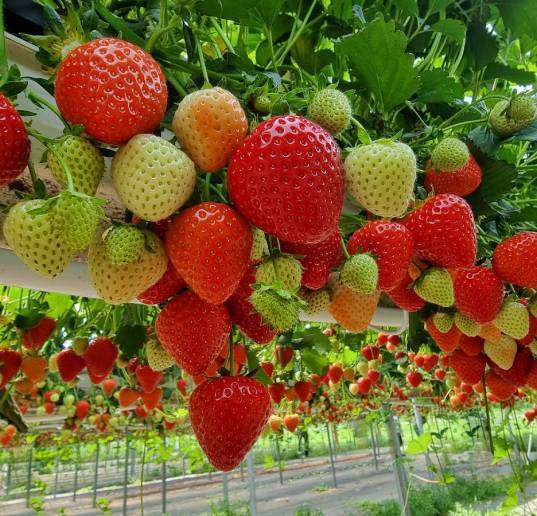

7 Reasons Top Growers Choose Cocopeat Grow bag Exporters for Strawberries
7 Reasons Top Growers Trust Cocopeat Grow bag Exporters for Strawberries
A strawberry plant lives fast. It flowers quickly, fruits early, and feels stress deeply. One wrong move with water, nutrition, or root health — and yields slide before you even realize it.
That’s why commercial berry farms in South Korea, Japan, the USA, Canada, Mexico, the Netherlands, Russia, and Dubai have quietly rebuilt their systems around cocopeat grow bags.
They don’t do this because it sounds modern. They do it because it works.
When growers talk about Cocopeat Grow bag Exporters for Strawberries, they are really talking about consistency — the kind that keeps plants steady week after week, flush after flush.
In greenhouses where every square meter counts, a good grow bag becomes more than a container. It becomes the plant’s entire world.
Here’s the thing: strawberries don’t forgive sloppy root environments. Cocopeat does the opposite — it cushions mistakes, smooths irrigation, and supports strong root architecture from day one.
Why strawberries behave better in cocopeat bags
Strawberries hate waterlogged roots. They also hate drought. That narrow middle ground is where cocopeat shines.
In a properly prepared grow bag, moisture spreads evenly. Excess drains quickly. Air remains present around the roots. Plants stay calm instead of panicked.
Growers notice this in subtle ways:
- Leaves look healthier, not stressed or curled
- Fruit size stays more uniform
- Plants recover faster after harvest flushes
- Root systems look clean and white instead of brown and slimy
Many large farms source their substrate from experienced Cocopeat Grow bag Exporters for Strawberries in Sri Lanka because of the country’s long tradition in processing coconut husk into high-quality agricultural media. The raw material itself begins with the humble Coconut, while the fiber inside the husk — known as Coir — is what makes these grow bags possible.
In Negombo, companies like Ceilan Coir Products Export (Pvt) Ltd refine this material into stable, low-salinity, pre-buffered bags that travel straight to commercial berry operations worldwide.
Cocopeat Grow bag Exporters for Strawberries — what actually matters
Not all grow bags are created equal.
Professional exporters focus on four quiet details that make or break strawberry performance:
- Texture balance
A mix of fine pith and small chips keeps water steady while maintaining airflow. - Proper buffering
Potassium and sodium must be controlled so nutrients behave predictably. - Structural stability
Bags should hold shape for an entire season without collapsing. - Uniformity across shipments
Every container should behave like the last one — no surprises.
When these elements come together, growers get predictable results. And predictable results mean reliable harvest schedules.
Many farms pair their strawberry systems with structured Grow Bags for Strawberry that sit neatly on benches or gutters, keeping fruit clean and off the ground.
Water, roots, and why this combo is so powerful
Strawberries are shallow-rooted. They explore sideways more than downwards. That means the surface zone must stay perfect — not too wet, not too dry.
Cocopeat behaves like a sponge with brains.
It absorbs water evenly but refuses to suffocate roots. This makes drip irrigation easier to fine-tune and reduces the risk of crown rot, a nightmare for berry growers.
In hot regions like Mexico or Dubai, this balance prevents midday stress. In cooler climates like Canada or the Netherlands, it avoids cold, soggy root zones that slow growth.
Many operations also transition their young plants from nursery trays directly into Coco Peat Grow Bags, keeping the root environment familiar and reducing transplant shock.
From nursery to production — a seamless journey
A strong strawberry season begins long before fruit appears.
Seedlings or runners raised in cocopeat adapt smoothly when moved into larger production bags. Roots don’t need to “relearn” their environment; they simply keep growing.
Some farms start plants in small trays, then move them into grow bags filled with the same cocopeat blend. Others receive rooted plugs from nurseries that already use coco-based media.
Either way, continuity reduces stress — and stressed strawberries rarely perform well.
A grower in Japan once said:
“I used this as like this for my strawberry plants in cocopeat grow bags, and we saw steadier flowering cycles compared to our old peat mix.”
That steady rhythm is exactly what commercial farms chase.
Why Sri Lanka remains a trusted source
Sri Lanka’s western coastline is lined with coconut palms. Over decades, local communities built deep expertise in washing, grading, and buffering coir products.
Exporters don’t just ship raw material; they ship performance.
Many international buyers prefer Sri Lankan suppliers because they deliver:
- Lower salinity
- Better particle consistency
- Stronger compression quality
- Reliable year-round supply
This connects small coconut farmers to high-tech berry greenhouses across the world — a quiet but meaningful bridge between tradition and innovation.
You can see how this fits into the broader coir economy through resources on Sri Lankan Coir and the global use of Coconut Coir.
Productivity that growers actually feel
Cocopeat grow bags don’t just improve plants; they simplify daily management.
Growers report:
- More predictable irrigation cycles
- Easier EC control
- Cleaner root inspections
- Less fungal pressure
- Fewer crop losses after transplant
One commercial berry farm in Canada shared:
“our customers are really happy with our strawberries grown in cocopeat bags, and they said the fruit tasted cleaner and looked more consistent.”
That kind of feedback doesn’t come from marketing — it comes from real harvests.
A simple comparison growers like to see
Strawberry substrate comparison (greenhouse view)
| Feature | Cocopeat Grow Bags | Peat Bags | Soil Beds |
| Water balance | Excellent | Good | Unstable |
| Root oxygen | Very high | Moderate | Often low |
| Disease risk | Lower | Moderate | Higher |
| Season stability | Strong | Variable | Variable |
| Sustainability | Very high | Questioned | Mixed |
This table works perfectly as an infographic for farm training or investor presentations.
Practical layout options in modern greenhouses
Growers use cocopeat bags in several smart ways:
- Bench systems for easy picking
- Gutter systems for automated drainage
- Vertical stacks to maximize space
- Low tunnels in semi-controlled environments
The flexibility of cocopeat makes all of these possible without changing the core growing medium.
Five FAQs about Cocopeat Grow bag Exporters for Strawberries
- Are cocopeat grow bags safe for organic strawberry production?
Yes. Many certified farms use properly washed and buffered cocopeat as an approved substrate. - How long do cocopeat grow bags last?
Typically one full growing season, sometimes longer depending on crop intensity. - Do growers need to add soil to cocopeat bags?
No. Most professional systems use 100% cocopeat with liquid feeding. - Why choose exporters from Sri Lanka?
Because of consistent quality, low salinity, and decades of processing experience. - Can these bags work in hot climates like Dubai?
Yes — cocopeat manages heat and moisture far better than traditional media.
