



 +94 (0) 31 228 1114
  info@cocopeatcoirmulch.com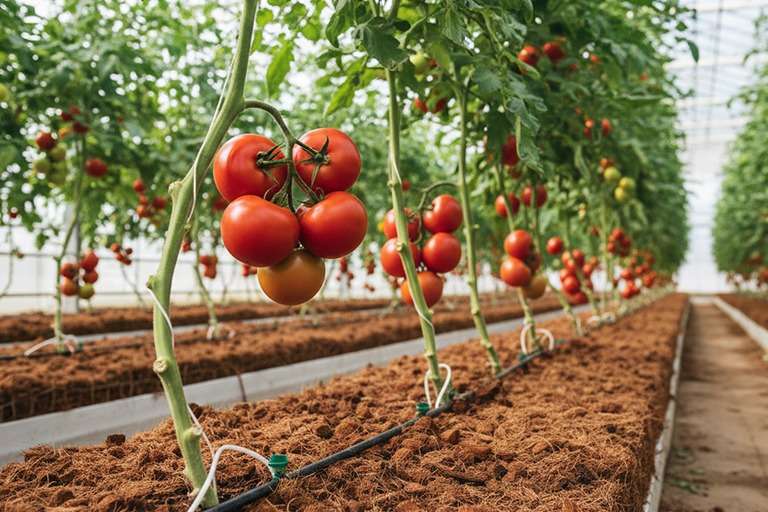

7 Practical Reasons Coco Coir for Tomatoes Is Dominating Commercial Greenhouses
Why Coco Coir for Tomatoes Keeps Showing Up in Serious Greenhouses
Walk into a modern greenhouse in Japan or the Netherlands and you’ll notice something familiar under the vines. It’s not soil. It’s not rockwool either. More often than not, it’s coco coir for tomatoes—and not by accident.
Tomato plants are demanding. They want moisture, but not too much. Nutrients, but not spikes. Air at the roots, always. Coir happens to sit comfortably in that narrow sweet spot. Honestly, once growers see how stable the root zone becomes, it’s hard to go back.
And yes, yield plays a role—but consistency matters just as much when you’re growing commercially.
How Tomato Roots Behave Differently in Coir-Based Media
Here’s the thing most brochures won’t tell you. Tomatoes don’t just grow in coco coir—they behave better.
The fibrous structure allows roots to spread evenly instead of clumping. That leads to:
- Balanced moisture retention
- Faster nutrient uptake
- Less stress during peak fruiting
You know what? Many growers report fewer blossom-end rot issues once they dial in calcium delivery properly. That’s not magic—it’s root oxygen and steady EC doing their job.
If you’re using structured systems like grow bags for tomato, the uniformity becomes even more predictable across rows.
Drainage, EC Stability, and Why Overwatering Stops Being a Nightmare
Tomatoes hate wet feet. Yet they collapse when stressed. That contradiction frustrates even experienced farmers.
Coco coir handles this tension well. Excess water drains cleanly, while internal capillaries hold just enough moisture. EC levels remain stable longer compared to compacted soil mixes, especially when paired with drip fertigation.
Some growers still worry about salt buildup. Fair concern. But properly washed Sri Lankan coir—produced from mature coconut husks—keeps sodium and potassium well within commercial tolerance ranges. For context, coir comes from the coconut husk itself, part of the same plant family described in broader detail on coconut cultivation and fiber extraction processes (see background on coir via Wikipedia’s overview of coconut and coir industries).
Choosing the Right Format Matters More Than the Brand Name
Not all coir setups perform the same. Format matters.
Commercial tomato growers usually rotate between:
- Open systems using open top planter Bags for flexible spacing
- Slab-style Coco Peat Grow Bags for uniform drainage and automated irrigation
Honestly, neither is “better” universally. Climate, cultivar, and labor availability shape that choice more than marketing claims ever will.
What Export Buyers Look for in Coir-Based Tomato Substrates
Greenhouse operators in South Korea, Canada, or Dubai don’t just ask for “coir.” They ask questions that signal experience.
Things like:
- Compression ratio consistency
- Fiber-to-pith balance
- Expansion volume per kg
- Batch-to-batch EC variance
Exporters operating from Sri Lanka—where coir processing has decades of industrial maturity—are expected to meet those benchmarks. It’s why many commercial buyers still trace sourcing back to established Coir-based Product Exporters in Sri Lanka rather than chasing cheaper alternatives.
Common Grower Mistakes (Yes, Even Experienced Ones)
Let me explain something that sounds contradictory. Coco coir is forgiving—but only up to a point.
Mistakes I still see:
- Skipping buffer checks before planting
- Treating coir like soil during early irrigation cycles
- Ignoring drainage slit placement in bags
The result? Nutrient lockout that looks like disease. It’s frustrating, but avoidable with proper setup and early monitoring.
Frequently Asked Questions
- Is coco coir suitable for long-cycle tomato crops?
Yes. When buffered correctly, coir maintains structure and air porosity throughout extended fruiting cycles.
- How often should coco coir grow bags be replaced?
Most commercial operations replace them every season, though some reuse with sterilization depending on disease pressure.
- Does coco coir affect tomato flavor?
Indirectly. Stable moisture and nutrient uptake can improve fruit uniformity, which growers often associate with better taste consistency.
- Can coco coir be used for crops beyond tomatoes?
Absolutely. Bell pepper, cucumber, melon, leafy greens, and berries all respond well to similar coir-based systems.
- What makes Sri Lankan coir preferred by exporters?
Mature husk sourcing, consistent washing standards, and export-grade processing infrastructure.
