


 +94 (0) 31 228 1114
  info@cocopeatcoirmulch.com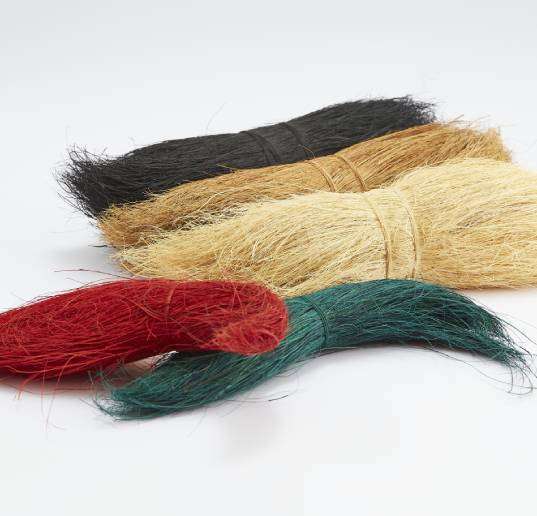

Bristle Fiber: 6 Things Every Commercial Grower Needs to Know
6 Things Commercial Growers Should Know About Bristle Fiber Before the Next Season
If you’ve been working in commercial horticulture for more than a season or two, you’ve almost certainly come across bristle fiber in some form, even if you didn’t call it by that name. It shows up in erosion control matting, hanging basket liners, mulch layers, and increasingly as a structural component in substrate blends for high-value crops. But most growers only ever see one application of it, which means they’re missing out on the broader picture.
Bristle fiber is the coarse, long-strand coir extracted from the outer husk of the coconut. It’s the toughest part of the husk, the material that gives coir its exceptional tensile strength and resistance to decomposition. Understanding what bristle fiber actually is, and what it can do across different growing contexts, is genuinely useful for anyone managing a commercial greenhouse or field operation.
Let me explain what seven seasons of grower feedback and production data from South Korea, Japan, the Netherlands, Canada, and Mexico actually shows.
What Makes Bristle Fiber Different from Other Coir Products
Coir comes in several forms, and the differences matter. Coco peat (or coir pith) is the fine, spongy material used in growing media. Short fiber is the intermediate-length material left after processing. Bristle fiber is the longest, coarsest grade, typically 10 to 30cm in length, with the highest lignin content and the slowest decomposition rate.
That slow decomposition is the defining characteristic. While coco peat breaks down within one to two seasons, bristle fiber can persist for three to five years or longer depending on conditions. That durability is exactly why it gets used in structural applications: erosion control blankets, geotextile mats, and substrate reinforcement systems that need to hold their form across multiple growing cycles.
According to the International Coconut Community (ICC), long-fiber coir products rank among the most durable natural fiber materials available for agricultural and horticultural applications, with tensile strength that competes with synthetic alternatives at a fraction of the environmental cost.
-
Bristle Fiber in Erosion Control: Where It Really Shines
Erosion control is the application most people associate with bristle fiber, and for good reason. Long-strand coir fiber woven or pressed into blankets and mats creates a physical barrier that stabilizes soil surfaces, slows water runoff, and allows vegetation to establish before the mat itself begins to degrade.
This matters in commercial growing contexts beyond traditional land management. Greenhouse operations in the Netherlands and South Korea managing raised bed systems on sloped growing floors, or field operations in Mexico and Canada with erosion-prone topsoil, use bristle fiber matting as a protective layer during crop establishment. The fiber holds the soil surface in place during heavy irrigation or rainfall, buying time for root systems to anchor the bed.
Growers using Coir Geo Textiles specifically designed for agricultural applications find that the structured woven format outperforms loose fiber mulch for slope stabilization, while still providing the biodegradability advantage that synthetic erosion fabrics lack.
-
Substrate Reinforcement in High-Volume Container Systems
Here’s something that doesn’t come up in standard product descriptions. Bristle fiber, when blended into coco peat-based growing media at low ratios (typically 5 to 15% by volume), acts as a structural reinforcement that maintains substrate porosity through repeated wet-dry cycles.
Coco peat alone, particularly at higher cation exchange capacities, can compact over time under the weight of irrigation and root development. Adding a proportion of long-strand bristle fiber creates an internal lattice within the substrate that resists compaction, keeping air channels open even after months of intensive production.
This approach is used in commercial tomato and cucumber operations in Japan and the Netherlands, where substrates need to maintain their physical structure through 9 to 12 month production cycles without replacement. The fiber essentially acts as a skeleton inside the growing medium.
For operations already using Coco Peat Grow Bags as their primary substrate container, specifying a bristle fiber-reinforced fill blend can extend the effective lifespan of each bag through the full production cycle without the compaction issues that sometimes affect plain coco peat fills in long-season crops.
-
Hanging Basket Liners and Ornamental Applications
This is an older application, but it remains one of the most commercially significant for bristle fiber globally. Coir fiber liners for hanging baskets are almost universally made from bristle fiber grades, because the coarse, long-strand structure creates a dense, stable liner that holds its shape through a full season of watering and outdoor exposure.
Commercial nurseries in South Korea, Canada, and the Netherlands producing hanging basket ornamentals at scale rely on bristle fiber liners because they drain freely (preventing root rot), allow side planting for trailing crops, and present a natural aesthetic that garden retail chains increasingly request from their suppliers.
The three-year durability of quality bristle fiber liners, compared to one-season foam inserts, also makes a real difference to per-basket input costs at commercial volume. I’ve spoken with nursery managers in Canada who initially budgeted for annual liner replacement and then found they were getting two full seasons from quality coir liners, changing their cost assumptions considerably.
-
Mulching Applications for Field Vegetable Production
Bristle fiber in loose or compressed mulch form creates a weed-suppressing surface layer that outperforms straw and most bark-based mulches in durability and consistency. The long fiber length means the material doesn’t blow or wash away as readily as shorter organic mulches, which is a particular advantage for field operations in exposed locations.
Tomato and capsicum growers in Mexico and Russia managing large field areas have found bristle fiber mulch holds its position through wind and irrigation in ways that straw simply doesn’t. Applied at 6 to 8cm depth, it provides effective weed suppression through the full growing season without mid-season top-up applications.
According to Sri Lanka Business, Sri Lanka’s bristle fiber production capacity has grown substantially over the past decade to meet increasing demand from European and North American horticultural markets. Supply chain reliability from established Sri Lankan exporters has improved in parallel, which matters for commercial operations planning input procurement across full growing seasons.
-
Thermal and Moisture Benefits in Root Zone Management
An underappreciated characteristic of bristle fiber in mulching and liner applications is its thermal behavior. The coarse fiber structure traps air between strands, creating an insulating layer that moderates root zone temperature in both directions: reducing heat gain in summer and slowing heat loss during cooler periods.
For berry growers in South Korea and Canada managing strawberry and blueberry production in tunnel greenhouses, maintaining root zone temperature within a relatively narrow range during the shoulder seasons (spring establishment and autumn extension) is genuinely challenging. Bristle fiber mulch applied around the plant base provides a low-cost thermal buffer that reduces the frequency of temperature excursions outside the optimal root zone range.
The moisture retention behavior of bristle fiber also contributes here. The fiber holds a modest amount of moisture within its structure, reducing evaporation from the soil surface below and extending the effective interval between irrigation events. Not dramatically, but consistently enough to matter in water-restricted growing environments.
-
Sustainability Profile and Certification Compatibility
Commercial growers increasingly face requirements from buyers, retailers, and certification bodies around the sustainability credentials of their inputs. Bristle fiber is a natural byproduct of coconut processing, requiring no additional extraction or resource consumption beyond what’s already generated by the coconut industry.
As noted in the Wikipedia overview of coir, coir fiber production represents one of the most complete utilization cycles in tropical agriculture, converting material that was historically considered agricultural waste into internationally traded commercial products. For greenhouse operations in the Netherlands and Canada working under organic certification frameworks or sustainability reporting obligations, this profile is straightforwardly compatible with most certification requirements.
There are no synthetic binders, no chemical treatments in standard processing, and no end-of-season disposal issues. Bristle fiber products biodegrade in place, contributing organic matter back to the system over time.
Bristle Fiber Product Applications: Quick Reference
| Application | Fiber Grade Used | Typical Lifespan | Best For |
| Erosion control blankets | Long bristle (20 to 30cm) | 3 to 5 years | Slopes, field establishment |
| Hanging basket liners | Medium bristle (10 to 20cm) | 2 to 3 seasons | Ornamental nurseries |
| Substrate reinforcement | Short to medium bristle | Full crop cycle | Tomato, cucumber, long-season crops |
| Surface mulch | Shredded bristle | 1 to 2 seasons | Weed control, moisture retention |
| Geotextile matting | Woven long bristle | 3 to 5 years | Soil stabilization, pathway edging |
How Bristle Fiber Compares to Synthetic Alternatives
The comparison that comes up most often in commercial conversations is bristle fiber versus polypropylene geotextiles and synthetic erosion fabrics. Synthetics win on upfront cost per square meter in most markets, and they offer more predictable performance specifications. That’s a real advantage in engineering-grade applications.
Where bristle fiber wins is in the end-of-life equation. Polypropylene matting must be removed, collected, and disposed of at end of use, which carries both labor costs and waste disposal fees that are rising in regulated markets across Europe and North America. Bristle fiber degrades in place. It doesn’t need to be removed, it doesn’t create plastic waste, and it adds organic matter to the soil as it breaks down.
For growing applications where the substrate or soil beneath the fiber is permanent, that difference matters considerably over a 10-year planning horizon.
FAQs
Q: What is the difference between bristle fiber and coco peat?
Bristle fiber is the long, coarse structural fiber extracted from the coconut husk. Coco peat (coir pith) is the fine, spongy material that sits between the fibers. They come from the same source but have very different physical properties and applications. Bristle fiber is used for structural applications like erosion control and basket liners; coco peat is used as a growing medium.
Q: How long does bristle fiber last when used as a mulch?
Applied at the recommended depth of 6 to 8cm, quality bristle fiber mulch typically lasts one to two full growing seasons before decomposing to the point where it needs supplementing. In sheltered or shaded positions with less UV exposure and rainfall impact, longevity is at the higher end of that range.
Q: Is bristle fiber safe to use around edible crops?
Yes. Bristle fiber is a natural, unprocessed agricultural byproduct with no chemical treatments in standard processing. It is compatible with organic growing systems and accepted under most major certification frameworks including USDA NOP and EU organic standards.
Q: Can bristle fiber be composted at end of use?
Absolutely. Bristle fiber is fully compostable, though its high lignin content means it breaks down more slowly than most organic materials. Adding it to a hot compost system or shredding it before composting speeds the process. For field applications, incorporating it into the soil at end of season is a practical alternative to removal and composting.
Q: Where is most commercial bristle fiber produced?
Sri Lanka and India are the primary global producers of commercial-grade bristle fiber for horticultural applications. Sri Lankan bristle fiber is particularly well-regarded for consistent quality and fiber length, with established export relationships across Europe, North America, and East Asia.
