



 +94 (0) 31 228 1114
  info@cocopeatcoirmulch.com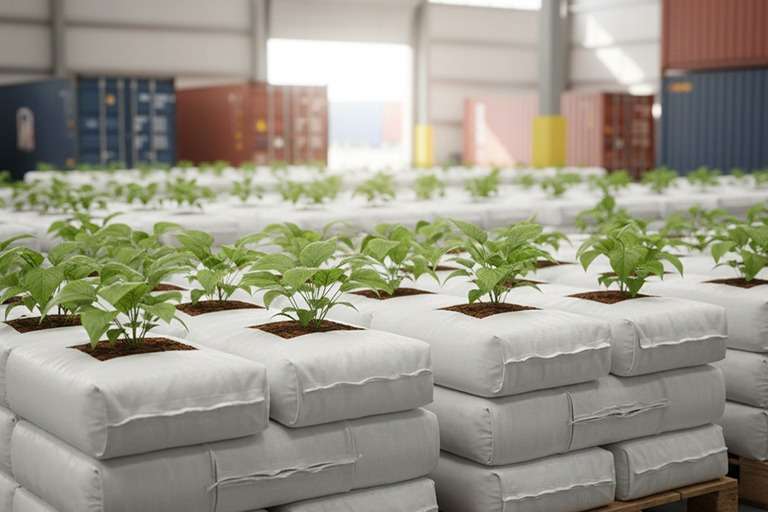

8 Real Reasons Cocopeat Exporters Are Trusted by Global Greenhouse Growers
Why Cocopeat Exporters Sit at the Center of Commercial Farming
Large greenhouse operations don’t gamble on growing media. They can’t afford to. That’s why cocopeat exporters matter more than most people realize.
For commercial growers in places like the Netherlands, Canada, or Japan, cocopeat isn’t a novelty—it’s infrastructure. When exporters fail to deliver consistency, the effects ripple quietly through irrigation schedules, nutrient programs, and ultimately yields. Honestly, by the time symptoms appear, the damage is already done.
Experienced growers know this. That’s why exporter selection is treated almost like a long-term partnership.
What “Export-Grade” Cocopeat Really Signals
Here’s the thing many newcomers miss. Cocopeat isn’t judged by how it looks when dry. It’s judged by how it behaves under pressure.
Export-grade material is evaluated on:
- EC stability after hydration
- Expansion volume accuracy
- Uniform fiber and pith balance
- Clean drainage behavior
When cocopeat expands unevenly or releases excess salts mid-cycle, growers are forced into constant corrections. That’s exhausting and expensive. Professional exporters work hard to prevent those surprises before shipment ever leaves port.
Consistency Beats Cost—Every Single Season
This sounds obvious, yet it’s often ignored. Cheaper cocopeat may work once. Maybe even twice. But commercial farming is about repetition.
Growers managing tomato, capsicum, cucumber, or berry crops depend on predictability. That’s why many pair trusted cocopeat supplies with structured systems like Coco Peat Grow Bags or compressed formats such as Coco peat Bale to maintain uniformity across blocks.
Let me explain it simply. When inputs behave the same way every season, decision-making becomes calmer. That calm shows up in yield data.
How Cocopeat Performs Across Different Climates
One reason cocopeat exporters serve such a wide global market is adaptability. Cocopeat handles humidity in Japan, cold winters in Canada, and heat in Mexico surprisingly well.
Its natural porosity allows oxygen flow even under heavy irrigation, while its water-holding capacity reduces stress during temperature swings. Coconut husk fibers have been valued for centuries for these physical traits, well documented in agricultural and material science discussions around coir as a renewable resource.
That balance is what allows growers to standardize systems despite wildly different climates.
Why Sri Lanka Continues to Lead This Market
Sri Lanka didn’t position itself as a cocopeat export hub by chance. The country’s coir industry evolved alongside global demand, refining washing, buffering, and drying processes year after year.
Many international buyers prefer sourcing through established Coir-based Product Exporters in Sri Lanka because they understand not only production—but logistics, documentation, and long-term supply stability.
It’s not flashy. It’s dependable. And in commercial farming, that’s everything.
Mistakes Growers Still Make When Choosing Exporters
Oddly enough, experience doesn’t always prevent missteps.
Common errors include:
- Focusing only on price per block
- Skipping post-hydration EC testing
- Assuming all cocopeat behaves the same
- Overlooking shipment-to-shipment variation
Here’s the mild contradiction. Cocopeat is forgiving, yet unforgiving. Small differences feel harmless at first, then compound quietly across thousands of plants.
Seasoned growers learn to question early—and often.
Frequently Asked Questions
- What makes cocopeat suitable for commercial greenhouse farming?
Its balance of water retention, drainage, and root aeration supports consistent crop performance.
- How do growers test cocopeat quality before large orders?
Most conduct expansion tests, EC analysis, and sample crop trials.
- Is cocopeat suitable for crops beyond vegetables?
Yes. It’s widely used for berries, ornamentals, and nursery propagation.
- Why is Sri Lanka such a major exporter of cocopeat?
Mature husk availability, refined processing methods, and export-focused infrastructure.
- Can cocopeat be blended with other substrates?
Some growers blend it with perlite or other materials depending on crop and climate.
